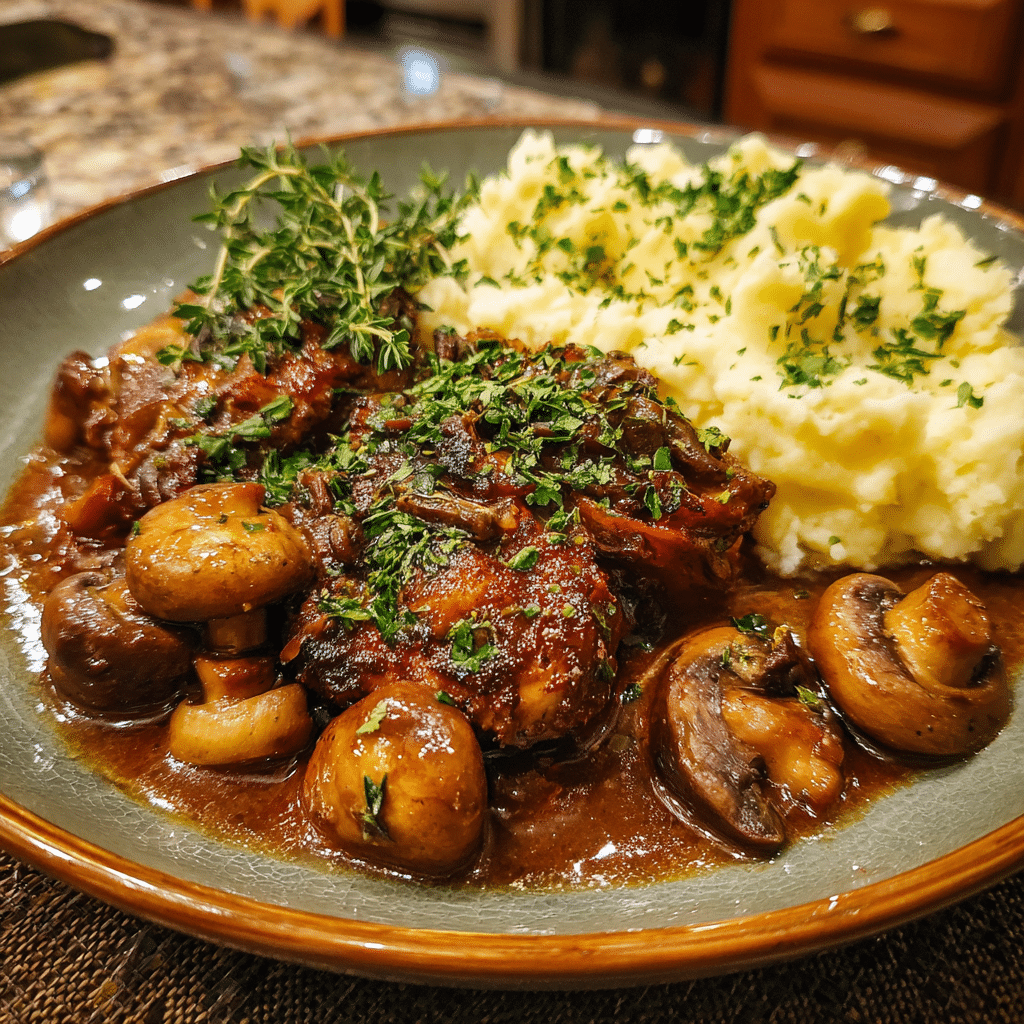
There’s a certain magic in the moment red wine hits a hot pan – a soft hiss, a plume of steam, and the scent of something ancient and comforting filling the air. Coq au Vin, or “rooster in wine,” isn’t just a recipe; it’s a story that’s been simmering for centuries. Born in the French countryside, it began as a clever way for farmers to turn a tough old bird into something tender, rich, and deeply satisfying.
Today, most of us use chicken instead of rooster, but the essence remains the same: patience, warmth, and a bottle of good wine. It’s the kind of meal that demands time – not because it’s difficult, but because it deserves it. You brown, you stir, you wait, and slowly your kitchen transforms into a little corner of Burgundy.
This recipe doesn’t chase perfection; it honors tradition. The trick isn’t just in the ingredients – it’s in the rhythm. A sip of wine for the pan, a sip for the cook, and a table full of people waiting for the kind of food that tells its own story.
Every version of Coq au Vin tells its own little story. Some are rich with smoky bacon, others heavy with herbs or garlic. What matters is balance — that slow dance between red wine, meat, and time. Below is the traditional lineup that makes the dish truly French and endlessly comforting.
Table of Contents
Table of Contents
Main Ingredients
- 1 whole rooster or 1 large chicken, cut into serving pieces
Traditionally, this dish was made with an old rooster, but chicken works perfectly. The secret lies in slow cooking until the meat falls off the bone. - 4 ounces of bacon or lardons, chopped
Adds saltiness and a smoky depth that makes the sauce unforgettable. - 2 cups of full-bodied red wine (Burgundy, Pinot Noir, or Côtes du Rhône)
This is the soul of the dish. The wine adds acidity and richness that slowly infuses every bite. - 1 cup of chicken stock
Balances the boldness of the wine with gentle, savory warmth. - 1 large onion, diced
Brings sweetness once caramelized. - 2 carrots, sliced into rounds
Adds a rustic, slightly sweet undertone to the sauce. - 3 garlic cloves, minced
Gives that classic French kick. - 1 tablespoon tomato paste
Adds color and depth to the sauce, giving it that signature burgundy sheen. - 1 bouquet garni (thyme, bay leaf, and parsley tied together)
Traditional French flavoring that brings everything into harmony. - 8 ounces mushrooms, halved
Earthy, tender, and perfect for soaking up the sauce. - 2 tablespoons butter
Finishes the dish with a silky, glossy texture. - Salt and pepper, to taste
Optional Add-Ons
- Pearl onions, lightly browned in butter
A touch of sweetness and a nod to the classic French presentation. - A splash of brandy before adding wine
For a deeper, more layered aroma that lingers.
Quick Tip
Choose a wine you would happily drink. If it’s too sharp or cheap, it will taste that way in the pot. The beauty of Coq au Vin is how it transforms simple ingredients into something extraordinary.
Step-by-Step: How to Make Coq au Vin Like a French Chef
Making Coq au Vin is not about rushing. It is about slow transformation, about watching simple ingredients melt into something luxurious. Follow these steps, and you will understand why this dish is considered one of France’s most soulful creations.
1. Marinate for Depth and Tenderness
Place your chicken pieces in a large bowl with the red wine, carrots, onions, garlic, and the bouquet garni. Cover and refrigerate overnight if possible.
This step allows the wine to gently flavor the meat while the herbs whisper their aroma into every fiber. If you are short on time, even two hours of marinating will make a difference.
2. Brown and Build the Base
In a large heavy pot, cook the chopped bacon until crisp. Remove and set aside, leaving the rendered fat in the pot.
Add the drained chicken pieces (reserve the marinade) and brown them on all sides until golden. This is where flavor begins to form. Do not rush it; let the surface caramelize slightly.
3. Deglaze with Brandy and Wine
Once the chicken is browned, pour in a small splash of brandy. Let it sizzle for a few seconds, then pour in the reserved wine marinade. The sound, the aroma, and the deep purple hue mark the moment the dish truly begins.
Scrape the bottom of the pot with a wooden spoon to lift every bit of flavor left behind by the chicken and bacon.
4. Add Vegetables and Simmer Slowly
Return the bacon to the pot along with tomato paste and chicken stock. Stir gently until the sauce begins to blend and thicken.
Bring to a soft simmer, then cover and cook on low heat for about 1½ to 2 hours. The meat should become fork-tender, the sauce rich and smooth. The longer it cooks, the better it becomes.
5. Finish and Serve
In a small pan, sauté the mushrooms in butter until golden and fragrant. Add them to the pot during the final 15 minutes of cooking.
Taste and adjust the seasoning with salt and pepper. The sauce should be glossy, slightly thick, and full of deep, warming aroma.
Cook’s Note
If your sauce feels too thin, remove the lid during the final 10 minutes to let it reduce naturally. If it thickens too much, add a splash of wine or stock to loosen it. Trust your senses; this dish rewards intuition.
Print
Coq au Vin (Rooster in Wine): A Rustic French Classic Reimagined
- Total Time: 2 hours 30 minutes
- Yield: 4 servings 1x
Description
A classic French Coq au Vin recipe made with tender chicken simmered in red wine, bacon, and herbs. Rich, comforting, and perfect for cozy dinners or special occasions.
Ingredients
1 whole rooster or 1 large chicken
4 ounces of bacon or lardons*
2 cups of full-bodied red wine
1 cup of chicken stock
1 large onion
2 carrots
3 garlic cloves
1 tablespoon tomato paste
1 bouquet garni
8 ounces mushrooms
2 tablespoons butter
Salt and pepper
Instructions
1. Marinate for Depth and Tenderness
2. Brown and Build the Base
3. Deglaze with Brandy and Wine
4. Add Vegetables and Simmer Slowly
5. Finish and Serve
Notes
Read article for details instructions
If your sauce feels too thin, remove the lid during the final 10 minutes to let it reduce naturally.
- Prep Time: 30 minutes
- Cook Time: 2 hours
- Category: Main Course
- Method: Braising
- Cuisine: French
Nutrition
- Serving Size: 1 plate (approximately 400 g)
- Calories: 580 kcal
- Sugar: 6 g
- Sodium: 760 mg
- Fat: 32 g
- Saturated Fat: 11 g
- Unsaturated Fat: 18 g
- Trans Fat: 0.2 g
- Carbohydrates: 12 g
- Fiber: 2 g
- Protein: 48 g
- Cholesterol: 155 mg
Serving and Pairing Suggestions
When Coq au Vin finally reaches your table, it is more than just a meal. It is the kind of dish that brings people closer, that slows time for just a moment. The deep, wine-rich sauce deserves good company on the plate, so here are a few ways to serve it beautifully.
1. The Perfect Companions
- Buttered Mashed Potatoes: Creamy and smooth, they soak up the sauce like a sponge and make every bite taste complete.
- Crusty French Bread: Ideal for scooping every last drop from the plate. A rustic baguette works best.
- Egg Noodles or Tagliatelle: Soft, wide ribbons of pasta that hold the sauce perfectly.
- Steamed Green Beans or Glazed Carrots: Add a bright, fresh note to balance the richness of the dish.
2. Wine Pairing
Tradition calls for Burgundy red wine, the same variety used in the cooking. A Pinot Noir or a medium-bodied Merlot also pairs beautifully.
If you prefer a lighter touch, try serving it with a chilled Beaujolais. The subtle fruitiness complements the deep, savory tones of the stew without overpowering it.
3. Presentation Tips
Serve Coq au Vin in a shallow bowl rather than a flat plate. Spoon the sauce generously over the chicken, letting the mushrooms and bits of bacon fall naturally into place.
A sprinkle of fresh parsley or a few thyme leaves on top adds color and fragrance. For a rustic French feel, serve it straight from the pot at the table. The sight of that glossy sauce and rising steam will speak louder than words ever could.
4. Optional Side Touches
A small green salad with mustard vinaigrette balances the heaviness of the meal. A slice of soft cheese afterward, like Brie or Comté, keeps the experience authentically French and deeply satisfying.
For more recipes follow me in Facebook and Pinterest.
Create an irresistibly soft loaf with our No-Knead Garlic Butter Bread Loaf.
Serve pillowy, buttery rolls with Herb Garlic Butter Parker House Rolls.
Whip up easy, flaky goodness using 5-Ingredient Garlic Butter Crescent Rolls.
Bake perfectly golden rolls every time with Skillet Garlic Butter Dinner Rolls.
Pull apart cheesy deliciousness with our Cheesy Garlic Butter Pull-Apart Bread.
Enjoy soft, restaurant-style comfort with Homemade Garlic Butter Breadsticks.
FAQs About Coq au Vin
Can I use white wine instead of red?
Yes, you can. If you prefer a lighter, slightly tangy version, use a dry white wine such as Chardonnay or Sauvignon Blanc. This variation is known as Coq au Vin Blanc. It creates a paler sauce with a softer, more delicate flavor. The cooking process remains exactly the same.
What is the difference between using rooster and chicken?
Traditionally, the dish was made with an old rooster because it was tougher and required slow braising to become tender. The long cooking time infused the meat with deep flavor. Most modern cooks use chicken because it is easier to find and softens faster. The flavor is milder, but still delicious when cooked slowly in wine and herbs.
How long can I store leftovers?
Leftovers keep well in the refrigerator for up to three days. The flavors actually deepen overnight, making the second serving even better. Reheat gently over low heat or in the oven at a moderate temperature until warmed through. Avoid boiling the sauce again, as it may lose its texture.
Can I freeze Coq au Vin?
Yes. Allow the dish to cool completely, then store it in an airtight container for up to two months. When reheating, thaw it slowly in the refrigerator and warm it gently to preserve the sauce’s smooth consistency.
Which wine is best for cooking?
A good rule is to cook with wine you would happily drink. Choose a medium-bodied red such as Pinot Noir, Burgundy, or Côtes du Rhône. Avoid wines that are overly sweet or heavily oaked. The right wine adds depth, not dominance.
How can I make the sauce thicker?
If the sauce feels too thin after simmering, remove the lid during the last ten minutes of cooking to let it reduce. Another option is to stir a teaspoon of flour or cornstarch mixed with a bit of water into the sauce. Let it cook for a few minutes until it reaches your preferred thickness.